
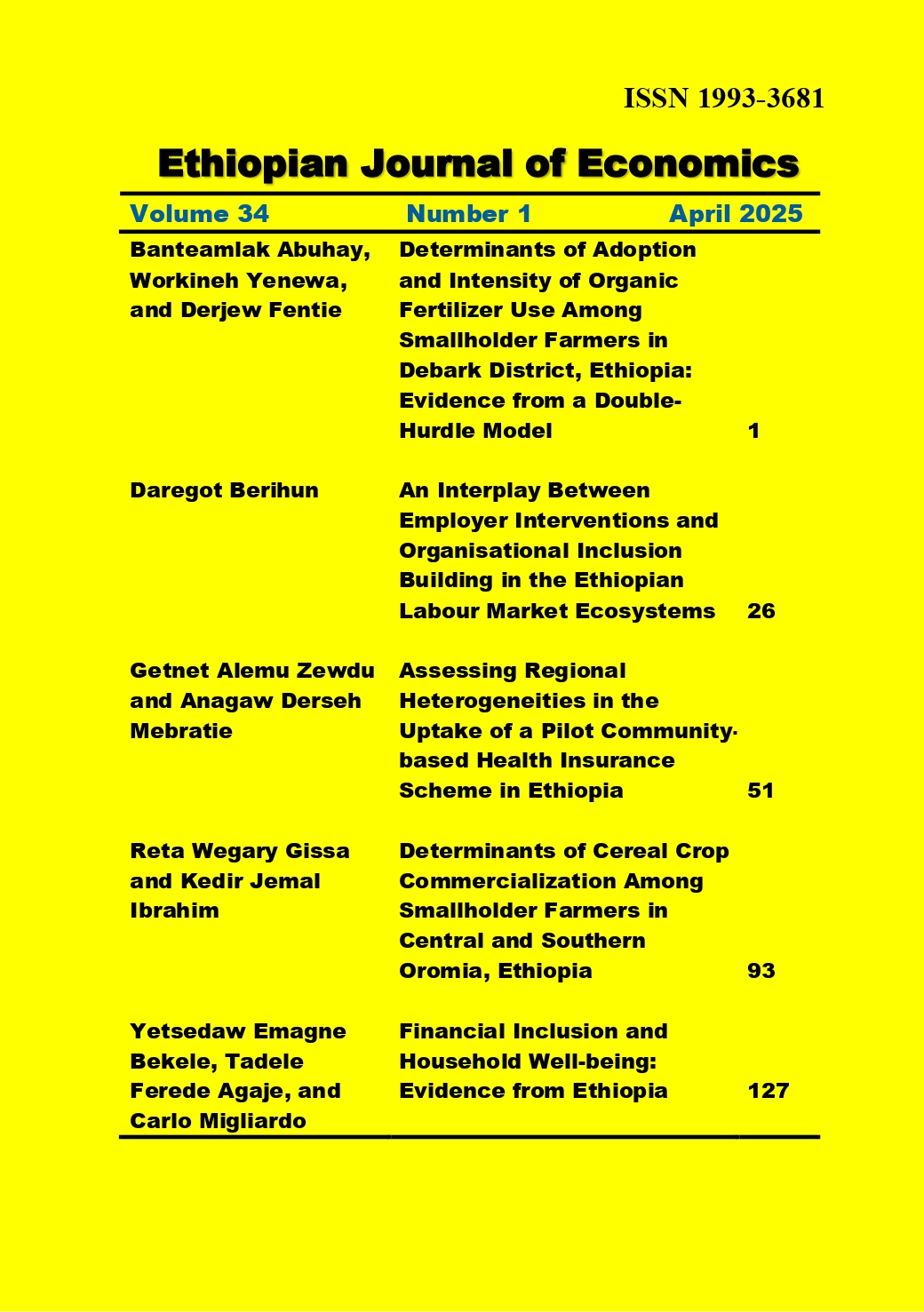
Determinants of Adoption and Intensity of Organic Fertilizer Use Among Smallholder Farmers in Debark District, Ethiopia: Evidence from a Double-Hurdle Model
Keywords:
Adoption; Organic Fertilizer; Determinants; Intensity; Double Hurdle ModelAbstract
Despite its significance, the agricultural sector in Ethiopia is commonly known for its low productivity. To address this issue and promote overall economic development, the Ethiopian government has been working on increasing the use of organic fertilizers. However, adoption rates remain low across regions, including the study area. This research identifies factors influencing the adoption and usage levels of organic fertilizers among smallholder farmers. Primary data were gathered from 300 farmers in the Debark district of the Amhara region using a two-stage sampling method. The study used descriptive statistics and a double-hurdle model. Findings from Cragg's double-hurdle model indicate that livestock ownership, frequency of extension contacts, access to training, land size, and labor availability positively influence the decision to use organic fertilizer. Additionally, the intensity of organic fertilizer use is positively affected by labor availability, livestock numbers, the frequency of extension contacts, and access to training. On the other hand, annual income and the use of inorganic fertilizers negatively affect the decision to adopt organic fertilizers and educational status has a negative impact on usage intensity. Therefore, working on enablers and hurdles and encouraging farmers to adopt organic fertilizers is crucial. This can be facilitated by the government and other stakeholders through enhanced extension services and improved access to training on organic fertilizer practices. This study suggests tailored solutions for farmers with limited livestock and highlights the necessity of enhancing smallholder farmers' access to extension support and simplifying the dissemination of technical knowledge regarding organic fertilizer usage.
Downloads
Downloads
Published
Issue
Section
License
Copyright (c) 2026 Ethiopian Journal of Economics

This work is licensed under a Creative Commons Attribution-NonCommercial-ShareAlike 4.0 International License.


